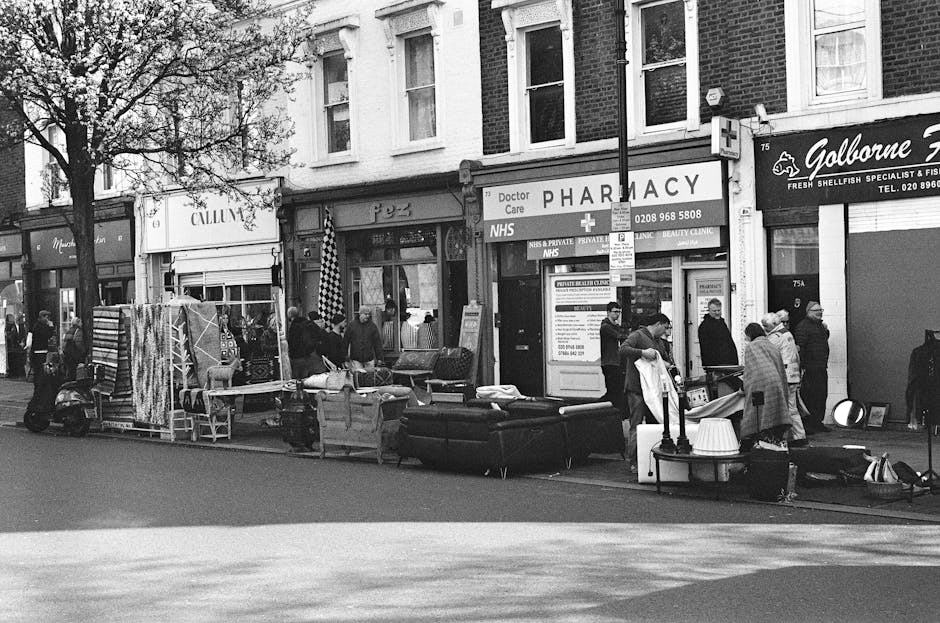
Putney High Street Bulky Waste Removal South West London: A Practical Guide for Homes, Flats and Businesses
If you need Putney High Street bulky waste removal South West London, you are probably dealing with the sort of items that do not fit neatly into a bin bag and definitely do not want to sit around any longer: a broken sofa, an old wardrobe, a mattress, a pile of flat-pack packaging, or a few heavy pieces left after a clear-out. It is one of those jobs that looks simple until you actually start moving things. Then the hallway feels narrower, the lift feels smaller, and the pile somehow gets bigger. Funny how that happens.
This guide explains how bulky waste removal typically works around Putney High Street, who it suits, what to prepare, and how to avoid the common mistakes that slow everything down. You will also find practical tips, a checklist, a comparison table, and a clear FAQ section so you can make a sensible decision without guesswork.
Table of Contents
- Why Putney High Street bulky waste removal South West London Matters
- How Putney High Street bulky waste removal South West London Works
- Key Benefits and Practical Advantages
- Who This Is For and When It Makes Sense
- Step-by-Step Guidance
- Expert Tips for Better Results
- Common Mistakes to Avoid
- Tools, Resources and Recommendations
- Law, Compliance, Standards, or Best Practice
- Options, Methods, or Comparison Table
- Case Study or Real-World Example
- Practical Checklist
- Conclusion
- Frequently Asked Questions
Why Putney High Street bulky waste removal South West London Matters
Bulky waste is different from ordinary household rubbish. It is larger, heavier, awkward to carry, and often made up of mixed materials. A single item can take up a surprising amount of room, and several items can quickly turn a home, shop stockroom, or office corner into a bottleneck. On a busy stretch like Putney High Street, that matters even more because space is tight and timing is often tight too.
Think about the practical side. A sofa left in a hallway can block access. A desk dumped in a back room can make work awkward. Old shop fittings, broken shelving, or a broken bed frame can become a fire escape issue or just a daily nuisance. In flats and shared buildings, bulky waste can create friction with neighbours, landlords, and building managers. No one wants that conversation in the middle of the week.
There is also the cleanliness factor. Bulky items left too long can gather dust, attract pests, or create an unkempt look that makes the whole property feel neglected. And if you are trying to sell, let, renovate, or simply breathe a bit easier, clearing these items is often one of the quickest wins you can make.
For many people, the real value is peace of mind. Once the item is gone, the job is done. No second trip to the tip, no wrestling with car seats folded down, no guesswork about what can fit where. To be fair, that simplicity is a big part of the appeal.
Expert summary: Bulky waste removal is less about throwing things away and more about restoring usable space safely, quickly, and with as little disruption as possible.
If the job includes a mix of items beyond just one sofa or mattress, it can also make sense to look at broader clearance support such as rubbish clearance or waste clearance rather than treating everything as separate one-off jobs.
How Putney High Street bulky waste removal South West London Works
In practical terms, the process is usually straightforward. You describe what needs removing, the provider assesses the load, and a collection time is arranged. On the day, the team arrives, loads the bulky items, and takes them away for sorting, reuse where suitable, or disposal through proper waste routes. Simple enough on paper. Real life, as ever, has corners.
Most bulky waste jobs start with a quick description of the items. A sofa is not just a sofa. Is it a two-seater or a corner unit? Does it come apart? Is there a lift? Are there stairs? Is the item dry, damaged, or heavy with hidden contents? These details affect handling, time, and the safest way to remove it.
On Putney High Street, access can be the deciding factor. Some properties sit above shops, some are in period buildings with narrow stairwells, and some modern flats have loading restrictions or limited waiting space. A good team will factor this into the plan before arriving, not after they are already balancing a wardrobe in the doorway. That part gets old fast.
Collection teams normally try to minimise disruption. If an item can be removed without damage, that is the preference. If furniture needs to be dismantled to get out safely, that may be done on site. For larger clear-outs, the job may be grouped with furniture disposal, sofa removal, or even a more general house clearance if several rooms are involved.
There is also the sorting stage. Bulky items are not all treated the same. Reusable furniture may be separated from damaged waste. Scrap metal, wood, textiles, and mixed materials may go different ways depending on condition and handling requirements. That is one reason professional removal is often cleaner and more efficient than trying to improvise a van run yourself.
Key Benefits and Practical Advantages
There are several good reasons people choose a professional bulky waste collection rather than doing it themselves. Some are obvious, some are not.
- Less physical strain: Heavy lifting is where many DIY attempts go wrong. A mattress down a staircase can be a bit of a comedy until it is your back on the line.
- Faster turnaround: What might take you half a day or more can often be handled in one organised visit.
- Better for tight spaces: Narrow hallways, shared entrances, and upper-floor flats are easier to manage with the right approach.
- Reduced disruption: If you are working, living, or trading from the property, time matters. The less the job interrupts the day, the better.
- Proper handling of mixed items: Bulky waste often includes different materials, and that needs thought, not guesswork.
- Cleaner finish: Once the bulky items are gone, the space feels genuinely reset, not just slightly less cluttered.
There is another benefit people often overlook: decision relief. Once the collection is booked, the item stops sitting there in your head. That may sound small, but it is real. Clutter has a way of becoming background stress. One less thing. Then another. Suddenly the place feels livable again.
If your clean-up is part of a broader domestic reset, you may also find it helpful to combine it with home clearance or flat clearance, especially where multiple bulky items are involved.
Who This Is For and When It Makes Sense
This kind of service is useful for a wide range of people. It is not just for major refurbishments or full-house clear-outs. In fact, the most common jobs are often the everyday ones: a damaged sofa, a spare bed that has been sitting in a box room for months, an old chest of drawers, or the contents of a garage that has quietly become unusable.
You may need Putney High Street bulky waste removal if you are:
- moving out and need to leave the property tidy
- replacing furniture and do not want the old item lingering
- clearing a flat, maisonette, or shared house
- preparing a rental property for new tenants
- managing office furniture or shop fittings
- dealing with items in a garage, loft, basement, or storage room
- sorting post-renovation leftovers that are too large for normal collection
It can also make sense for landlords and letting agents who need a property turned around quickly, or for local businesses that need old stockroom items removed without causing a scene. Let's face it, the best time to remove bulky waste is before it becomes an obstacle to everything else.
If the items are tied to a wider property project, related services like garage clearance, furniture disposal, or office clearance can be a better fit than one isolated collection.
Step-by-Step Guidance
If you want the job to go smoothly, it helps to treat it like a small project rather than an afterthought. Here is a sensible approach.
- Identify exactly what needs removing. Write down the items, rough sizes, and whether they are broken down or intact.
- Check access. Note stairs, lifts, narrow doorways, parking restrictions, or building rules.
- Separate bulky waste from anything you want to keep. This sounds obvious, but rushed clear-outs have a habit of producing regrets.
- Group similar items together. It saves time on the day and helps the team work efficiently.
- Flag any awkward items. Mattresses, glass-topped tables, heavy wardrobes, or wet garden waste need specific handling.
- Arrange the collection. Pick a time that suits access and avoids peak disruption.
- Clear the route. Hallways, doors, and the lift area should be free of obstacles where possible.
- Walk through the space after removal. Check corners, under furniture, and behind doors. Stuff always hides where you least expect it.
One practical tip: take a couple of photos before the collection, especially if access is awkward. It helps avoid confusion and makes quoting more accurate. Nothing fancy. Just clear pictures of the items and the route out.
If the project has a bigger tidy-up attached to it, you may want to explore rubbish removal for general waste or waste removal where the load is broader than a single item.
Expert Tips for Better Results
The difference between a smooth collection and a stressful one is often in the preparation. Small things matter here.
Tip 1: Make the route easy. A clear hallway saves more time than people realise. Moving shoes, plant pots, umbrella stands, and small tables out of the way can make the whole job feel half as hard. Seriously, that tiny bit of effort pays back.
Tip 2: Be honest about item condition. If a sofa is water-damaged, split, or infested with dust and debris, say so. It affects handling and disposal planning. Truth be told, surprises are not useful in waste work.
Tip 3: Think in categories. A mixed pile is fine, but it helps to know whether you are dealing with furniture, garden waste, builders waste, or office items. That can shape the best method.
Tip 4: Don't leave it to the last minute. If you are moving out or handing keys back, book early. Last-day clear-outs have a stressful energy all of their own, and nobody needs that at 7:30 on a Thursday morning.
Tip 5: Plan for awkward fittings. A wardrobe might need to be dismantled. A sofa may not fit down the stairs in one piece. A good provider will know how to approach it, but a little advance warning helps a lot.
Tip 6: Combine jobs when it makes sense. If you are removing one item from a flat but also have a few bags, a broken lamp, and some packaging, grouping the load can be more efficient than splitting it into separate visits.
For renovation debris or mixed heavy materials, it may be more appropriate to look at builders waste rather than standard household collection, particularly if the load includes timber offcuts, packaging, and construction leftovers.
Common Mistakes to Avoid
There are a few errors that come up again and again, and they are easy to avoid once you know what to look for.
- Underestimating access problems: A large item may look manageable until you reach the staircase.
- Mixing wanted items with waste: This is one of the easiest ways to end up annoyed with yourself afterwards.
- Forgetting to measure: If an item is too large for the route out, the job can slow down quickly.
- Not checking building rules: Some flats and managed properties have collection timing or parking restrictions.
- Leaving items in a shared area too long: It can create complaints or block access.
- Assuming all bulky waste is the same: A mattress, a sofa, and a broken wardrobe may all need different handling.
There is also the "I'll deal with it later" trap. That one is common. A single awkward item becomes a small piece of background furniture in your life, and before long you stop seeing it. Until you have visitors. Or you need the space. Or you trip over it in the dark. Not ideal.
One more thing: if the load includes work-related items, do not assume home waste rules or routines apply. Business premises often benefit from a more organised collection plan, especially where ongoing waste is involved. That is where business waste support can be the more sensible route.
Tools, Resources and Recommendations
You do not need specialist equipment for every bulky waste job, but a few basics help the process run better.
- Tape measure: Useful for checking whether an item will fit through a doorway or down a stairwell.
- Phone camera: Helpful for taking quick photos of the items and access points.
- Gloves: Good for moving small items or clearing around larger ones.
- Trolley or sack truck: Sometimes useful, though not always practical in narrow residential spaces.
- Label stickers or notes: Handy if you are sorting keep, donate, recycle, and remove piles.
In terms of planning, it helps to keep one simple rule in mind: the fewer unknowns, the better. Know what is leaving. Know where it is going from. Know how it gets out. That alone saves a surprising amount of friction.
If you are clearing a property from top to bottom, services like house clearance and home clearance are worth comparing with one-off bulky item collection. And for heavier general waste flows, waste collection may be the cleaner long-term option.
Law, Compliance, Standards, or Best Practice
When dealing with waste in the UK, the main principle is simple: it should be handled responsibly and passed to appropriate waste routes. For householders, that usually means using a reputable service and avoiding fly-tipping or informal disposal arrangements. For businesses, the duty of care is more structured, and records, segregation, and proper transfer matter more.
This does not need to become a legal lecture. But it is worth being careful. If you leave bulky waste in the wrong place, or hand it to someone who is not handling it properly, the hassle can come back to you. Nobody wants that. In practice, sensible compliance usually means:
- making sure items are collected by a legitimate operator
- keeping waste types sensibly separated where possible
- avoiding prohibited items being mixed in without warning
- checking that access and loading are safe on the day
- using proper documentation where business waste is involved
Best practice also includes being considerate to neighbours, managing timing well, and keeping shared areas clear. In a place like Putney High Street, where properties and businesses sit close together, good manners are not just nice. They are practical.
Options, Methods, or Comparison Table
If you are deciding how to handle bulky waste, it helps to compare the main options honestly.
| Method | Best for | Advantages | Limitations |
|---|---|---|---|
| DIY disposal | Small loads, people with transport and time | Direct control, can seem cheaper at first | Heavy lifting, access issues, multiple trips, time-consuming |
| Local authority collection | Simple items where service availability fits | Familiar process, can suit basic needs | May involve waiting, item limits, or less flexibility |
| Professional bulky waste removal | Single items, mixed loads, awkward access, urgent clear-outs | Fast, practical, less physical effort, better for awkward spaces | Cost depends on volume, access, and item type |
For many Putney households and businesses, the professional route wins because it solves the real problem: getting large items out safely and quickly. Cost matters, of course, but so does time, convenience, and not injuring yourself trying to be heroic with a sofa.
If the item is a sectional sofa, recliner, or sofa-bed, it may be worth looking at a specific sofa removal option rather than treating it as generic rubbish. Same item, different headache.
Case Study or Real-World Example
A typical local scenario might look like this. A resident in a Putney High Street flat has replaced a worn-out sofa and a heavy armchair. The building has a narrow shared corridor, a small lift, and a strict "no clutter in communal areas" rule. The items are too large to leave outside safely, and the resident does not have a vehicle big enough to transport them.
Rather than trying to wedge the pieces into a car or booking a whole day around a tip run, they arrange a collection. Before the visit, the resident measures the doorway, moves small items out of the route, and takes a quick photo of the sofa. On the day, the team assesses the access, removes the items carefully, and clears the space in one visit. The result is simple: the room feels bigger, the hallway is clear, and the old furniture is gone by lunchtime.
That is the sort of outcome people usually want. Not drama, not delay. Just space, restored.
In a slightly different scenario, a local office may have a cluster of old desks, broken chairs, and storage items after a reconfiguration. In that case, an office-focused approach can be more appropriate than a domestic one, especially if the job ties into broader office clearance or ongoing business waste management.
Practical Checklist
Use this checklist before booking your bulky waste collection.
- List every item that needs to go
- Measure large items and doorways if access is tight
- Check for stairs, lifts, parking, and building restrictions
- Separate items you want to keep
- Remove loose contents from drawers, cupboards, and sofas
- Tell the provider about heavy, damp, broken, or awkward items
- Decide whether this is a single item job or part of a larger clearance
- Clear the route from the item to the exit
- Confirm the collection time suits your schedule
- Do a final sweep after removal for small leftover pieces
Quick takeaway: The more prepared you are, the smoother the removal, and the less likely you are to end up rushing around with a tape measure five minutes before the van arrives.
Conclusion
Putney High Street bulky waste removal South West London is really about making a difficult, awkward job feel straightforward. Whether you are clearing one heavy item or several pieces at once, the best result comes from good planning, clear access, and a practical approach to the load. That applies to homes, flats, offices, garages, and shops alike.
Choose the right level of service for the job, be honest about access, and do not leave bulky items hanging around longer than they need to. The space you get back is often worth more than people expect. It is a small thing, maybe, but a proper clear-out can change how a place feels.
Get a free quote today and see how much you can save.
If you want to learn more about the company behind the service, you can also read about us. For questions about service details or booking, use the contact page.
Frequently Asked Questions
What counts as bulky waste in Putney High Street?
Bulky waste usually means large household or commercial items that are too big or heavy for normal rubbish collection. Common examples include sofas, wardrobes, mattresses, desks, tables, chairs, and broken appliances. The key issue is not only size, but also how awkward the item is to move.
Can bulky waste be removed from a flat or upper-floor property?
Yes, in most cases it can. Flats are very common on and around Putney High Street, so access planning matters. Stairs, lifts, tight corners, and shared hallways all affect how the collection is carried out, but they do not automatically prevent removal.
Is it better to book one-off bulky waste removal or a full clearance?
It depends on how much you need to remove. If you only have one or two items, a targeted collection is usually enough. If you are clearing several rooms, a loft, a garage, or an entire property, a broader clearance service is often more efficient.
Do I need to dismantle furniture before collection?
Not always. Many items can be taken away intact if access allows. That said, some wardrobes, bed frames, or large sofas may need partial dismantling to get through doorways or down stairs safely. It helps to mention this in advance.
What should I do before the collection team arrives?
Clear the route, remove loose personal items, and make sure the items to be collected are easy to identify. If possible, measure awkward furniture and note any access restrictions. A little preparation makes the visit much smoother.
Can builders waste be taken away with bulky household items?
Sometimes, but it is better to separate them where possible. Builders waste can include mixed heavy debris, timber, plaster, packaging, and other renovation leftovers. If your load is mainly construction-related, a dedicated builders waste approach is usually more sensible.
What happens to bulky waste after it is collected?
It is typically sorted so that reusable or recyclable materials can be separated where practical, while the remaining waste goes through appropriate disposal routes. Exact handling depends on the item type, condition, and the waste stream involved.
Is bulky waste removal suitable for businesses?
Yes. Shops, offices, studios, cafes, and other local premises often need bulky items removed during refits, refurbishments, or stockroom clear-outs. Business waste usually needs a bit more planning, especially where ongoing collections or records are involved.
What are the most common mistakes people make?
The biggest mistakes are underestimating access, not measuring items, forgetting to clear the route, and leaving the job until the last minute. Another common one is mixing items you want to keep with items to be removed. That one causes unnecessary grief, honestly.
How can I make the collection quicker?
Group items together, note access details, remove loose contents, and tell the provider about anything unusually heavy or awkward. If the route out is already clear, the whole job tends to move faster and with less fuss.
Can bulky waste removal help with a garage or garden clear-out?
Yes. Garages and gardens often hide larger items that are hard to dispose of casually, such as old shelving, broken chairs, outdoor furniture, tools, or mixed clutter. In those cases, garage clearance or garden clearance may be the more practical starting point.
How do I decide whether a sofa needs a dedicated removal service?
If the sofa is large, sectional, heavy, or awkward to move, a specific sofa service can save time and reduce the risk of damage. If it is part of a bigger furniture or home clear-out, it may be better handled within a wider clearance plan.
What is the safest way to deal with bulky waste in a shared building?
Keep communal areas clear, avoid blocking exits, and arrange the removal for a time that causes minimal disruption. If you live in a managed building, check any access or parking rules first. A calm, tidy approach is usually the safest and least annoying for everyone involved.
Final note: If the pile feels bigger than the room, that is usually the sign it is time to get it moving. One clean removal can make the whole place feel lighter.